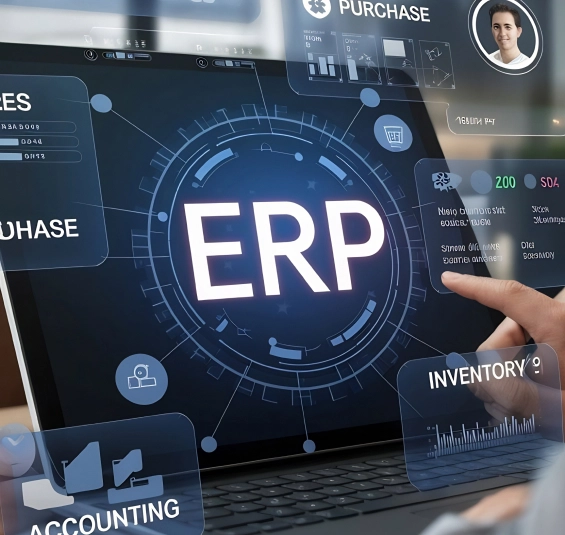

How ERPNext UAE Improves Financial Management for SMEs in the UAE

Managing finances for a small or medium business in the UAE is complicated. You’re dealing with VAT compliance, multi-currency transactions, employee payments through WPS, and the constant pressure to understand where your cash actually is. If you’re doing most of this manually or across disconnected systems, it’s draining more time and energy than it should. ERPNext financial management changes that. Not by adding more complexity, but by automating the routine work and giving you clear, real-time visibility into how your business is actually performing financially.

This guide walks through exactly how ERPNext UAE improves financial management for SMEs in the UAE, from day-to-day accounting to compliance to the financial reports that help you make better decisions.

Here’s what we’ll cover:

  • Real-time accounting and how it changes decision-making
  • VAT compliance and FTA reporting
  • Automated invoicing and billing
  • Expense tracking and approvals
  • Cash flow management and forecasting
  • Financial reporting for UAE businesses


Real-Time Accounting: Stop Making Decisions on Old Data

Most SMEs in the UAE are making financial decisions based on data that’s days or weeks out of date. The accountant closes the books at month-end. You get a report two weeks later. By then, the decisions you needed to make have already been made without the right information.

ERPNext UAE runs on a real-time general ledger. Every transaction, whether it’s a customer invoice, a supplier payment, a payroll run, or a stock movement that has a cost impact, updates the accounts immediately.

That means when you log in on a Tuesday afternoon, you’re looking at your actual financial position as of that moment. Not last month. Not last week. Right now.

For a business owner managing cash flow tightly, that difference is significant. You can see in real time whether a payment has cleared, whether a receivable is overdue, and whether you have the liquidity to approve a purchase.

This is what accounting automation through ERPNext UAE actually delivers. Less manual reconciliation. More time making decisions instead of preparing data.


VAT Compliance in the UAE: Built into Every Transaction

VAT compliance is a requirement that every UAE business takes seriously, and for good reason. Errors in VAT filing carry financial penalties. Manual VAT calculations across hundreds of transactions create real risk.

ERPNext UAE handles VAT compliance. When you set up your tax templates correctly, every invoice, every purchase order, and every expense claim calculates VAT automatically based on the applicable rates and the nature of the transaction.

When you need to file your quarterly VAT return with the Federal Tax Authority, ERPNext UAE generates a VAT return report that shows:

  • Output tax (VAT charged to customers)
  • Input tax (VAT paid to suppliers)
  • Net VAT payable or refundable
  • Breakdown by tax rate and transaction type

For UAE businesses with a mix of standard-rated, zero-rated, and exempt transactions, the system tracks each category separately so your return is accurate and auditable.

We help UAE businesses configure their VAT settings correctly during implementation, because getting the tax templates right from the start is much easier than cleaning up a year’s worth of transactions later.


Automated Invoicing and Billing: Get Paid Faster

Delayed invoicing is one of the most common reasons SMEs have cash flow problems. The work gets done, but the invoice goes out three weeks later because someone was busy, or the information was in three different places and needed to be pulled together manually.

ERPNext UAE takes the manual work out of invoicing. Invoices are generated directly from sales orders, delivery notes, or project time logs, so when a delivery is confirmed or a project milestone is reached, billing happens automatically without anyone having to re-enter data.

The invoicing module also covers:

  • Recurring invoices for subscriptions or retainer clients
  • Multi-currency invoicing for international customers
  • Credit terms and automatic due date calculation
  • Payment reminders when invoices go overdue
  • Customer account statements on demand

For businesses dealing with clients across multiple currencies, ERPNext UAE handles exchange rates automatically. That means no manual conversions and no scrambling to record rate differences at month-end, it’s all tracked as you go.


Expense Tracking and Approval Workflows: Control Costs Before They Become a Problem

Expense management is an area where a lot of SMEs leak money without realizing it. Expenses are submitted on paper or by email. They get approved informally. They’re entered into accounting manually. There’s no systematic check on whether expenses are appropriate or whether they’re being double-submitted.

ERPNext_UAE’s expense tracking feature lets employees submit expense claims directly through the system. Each claim goes through an approval workflow before it’s processed. The approver sees the amount, the category, and any supporting documentation. Once approved, the expense flows into accounting automatically.

For businesses with multiple employees or departments, the ability to track expenses by department, project, or cost center gives managers visibility into where money is being spent across the organization, not just in total.

This level of expense tracking also makes audit preparation much easier. Every expense is documented with its approval history, which is what auditors look for.


Cash Flow Management: See What’s Coming Before It Arrives

Cash flow is the number one pressure point for most UAE SMEs. You might be profitable on paper but short on cash because customers pay late and suppliers want payment early. Managing that gap requires visibility into what’s coming in and what’s going out, and when.

ERPNext UAE provides cash flow management tools that show you:

  • Outstanding receivables aged by due date
  • Upcoming supplier payments due
  • Payroll obligations
  • Expected collections based on payment terms

The accounts receivable aging report is one of the most used tools in ERPNext UAE for SMEs. It shows you exactly which customers owe you money, how much, and how overdue they are. This makes follow-up calls and payment chasing much more focused and effective.

The accounts payable side shows you upcoming obligations so you can plan ahead. If you know three large supplier payments are due in the same week, you can take action early rather than being caught short.

For SMEs using ERPNext UAE for cash flow management, this kind of forward visibility is one of the most immediately impactful changes they see after going live.


Financial Reporting for UAE Businesses: The Numbers That Actually Matter

Standard accounting systems produce standard reports. ERPNext UAE goes further by giving you reports that reflect how your specific business operates.

Reports that UAE SMEs use most:

Profit and Loss by Cost Center: See how different departments or business lines are performing, not just the company as a whole.

Balance Sheet: A real-time view of assets, liabilities, and equity. Updated continuously, not just at month-end.

Cash Flow Statement: Track operating, investing, and financing cash flows in one view.

Customer-wise profitability: See which customers generate the most profit after accounting for their associated costs.

Sales and Purchase Analytics: Trend data on revenue and spending over time, by item, by supplier, or by customer.

Budget vs. Actual: Set budgets and track actual performance against them in real time.

For business owners who want to present financial results to investors, banks, or board members, ERPNext UAE generates reports that are clean, consistent, and can be exported in formats suitable for external stakeholders.

We help UAE businesses build the reports they actually need, not just the default reports that come with the system. Because the goal isn’t reports for the sake of reports. It’s financial visibility that supports faster, better decisions.


Multi-Currency Financial Management for UAE Businesses

The UAE’s position as a regional trading hub means many businesses deal in multiple currencies daily. Invoices in USD, supplier payments in EUR, customer receipts in AED. Tracking all of this manually and calculating exchange differences at month-end is tedious and error-prone.

ERPNext UAE handles multi-currency transactions natively. You set up currency exchange rates, and the system calculates the AED equivalent automatically. At month-end, it calculates unrealized exchange gains and losses on open transactions and records them correctly in your accounts.

This is a feature that saves significant accounting time for businesses with active international transactions, and it reduces the risk of exchange rate errors that could misstate your financials.

At Wahni IT Solutions, we help plan, customize, implement, and optimize VAT-compliant ERPNext UAE modules according to your business’s exact needs for all departments. We are certified ERPNext providers and authorized Frappe ERPNext Gold Partner and help businesses whether they are from retail, manufacturing, trading & distribution, engineering, or any other industry. If you also need help with migrating from your existing ERP software to ERPNext UAE or implement it from scratch, get in touch with us.

Frequently Asked Questions

Q: Can ERPNext handle the UAE’s Wage Protection System (WPS) requirements?

Yes. ERPNext’s payroll module can generate WPS-compliant salary files in the SIF format required by the UAE Ministry of Human Resources and Emiratisation. This makes payroll processing and WPS submission significantly more efficient. Configuration requires setting up the correct bank and employee details, which is done during implementation.

Q: Is ERPNext UAE a good fit if I’ve never used accounting software before?

It can be, but it’s worth being honest with yourself about where your business is right now. If you’re still in the very early stages with just a handful of transactions each month, the setup process might feel like a lot of effort upfront. ERPNext tends to show its real value once your transaction volume has grown to the point where spreadsheets and manual processes are clearly slowing you down or causing mistakes. If you do decide to go ahead, the smartest move is to start small. Get the accounting and invoicing modules working well first before layering anything else on top.

Q: Can ERPNext UAE integrate with banking systems for payment reconciliation?

Yes, though the level of integration depends on your bank. The most common approach and the one most UAE businesses actually use day-to-day is importing your bank statements directly into ERPNext in CSV or Excel format and matching them against your system entries from there. It’s straightforward and works well for most businesses.

As for direct, real-time API connections with UAE banks, that’s a different story. It really comes down to whether your bank offers that kind of API access. If you need something more advanced than statement imports, it’s doable, but you’d likely need some custom development work to make it happen.

What Are the Benefits of Cloud-Based ERP Systems Like ERPNext UAE

Running a business in the UAE means making decisions fast. And one decision that keeps coming up for growing SMEs is whether to stick with on-premise software or move to a cloud-based ERP system. It’s not just a tech decision. It affects how your team works day to day, how much you’re spending on IT, how quickly you can grow, and how safe your business data actually is. A lot of businesses in the UAE are making the switch, and most of them aren’t going back. Cloud-based ERP systems like ERPNext UAE work differently from the traditional setup. There’s no software to install on office servers. No hardware to maintain. Your team logs in through a browser or mobile app and gets to work, whether they’re in the office, at a client site, or working from home.

Here’s what we’ll cover:

  • Lower upfront costs and predictable ongoing expenses
  • Remote access and how it changes the way teams work
  • Scalability as your business grows
  • Data security in the cloud
  • Automatic updates and reduced IT burden
  • How ERPNext UAE specifically benefits from cloud deployment

Also Read: How UAE Businesses Can Actually Fix VAT Compliance and Operations with ERPNext

Lower Upfront Costs: Stop Paying for Infrastructure You Don’t Need

Traditional on-premise ERP requires significant upfront investment. Servers, hardware, operating system licenses, database licenses, and IT staff to manage all of it. Before you’ve even configured the ERP software itself, you’ve spent a significant amount of money on infrastructure.

Cloud-based ERP systems change this model completely. You don’t buy servers. You don’t manage hardware. You pay a subscription or hosting fee, and the infrastructure is handled for you.

For SMEs in the UAE, this matters a lot. Capital that would have gone into servers and IT infrastructure stays in the business. The ERP becomes an operating expense rather than a capital expense, which also has implications for how it affects your balance sheet.

Cost-effective ERP solutions in the cloud also make it feasible for smaller businesses to access enterprise-grade software that would have been out of reach under the traditional licensing model. ERPNext UAE in particular is open-source, which removes software licensing costs entirely and is customized for UAE businesses. You pay for hosting, implementation, and support rather than software licenses.

Also Read: Why UAE Manufacturers Need an ERPNext Solution Company

Remote Access: Your Business Runs Even When You’re Not in the Office

The shift toward remote and hybrid work has made remote access ERP capability a real business requirement, not just a nice-to-have.

With cloud-based ERPNext UAE, your team accesses the system through a web browser from any device with an internet connection. Your accountant can process invoices from home. Your warehouse manager can check stock levels from a tablet on the floor. You can review financial reports from anywhere in the world.

For businesses in the UAE with teams spread across different locations, or with leadership that travels frequently, this kind of accessibility means the business keeps moving regardless of where people physically are.

It also helps with client-facing work. A sales rep can check stock availability and generate a quote in a customer meeting without going back to the office. A project manager can log time and update project status from a site visit.

Remote access isn’t just about convenience. It compresses decision-making timelines and reduces the friction that builds up when the information people need is stuck in an office system they can’t reach.

Also Read: Frappe Framework Explained: A Non-Technical Guide for Business Owners

Scalability: Grow Without Starting Over

One of the most practical benefits of cloud-based ERPNext UAE is how well they scale with your business.

With on-premise systems, growth often requires new hardware, additional licenses, and potentially significant IT work to upgrade the system. With cloud ERPNext UAE, scaling up is typically a matter of adjusting your hosting plan or adding user licenses.

If your business opens a new branch, you add the new company entity in ERPNext UAE without new infrastructure. If you hire 20 more people, you add user accounts. If transaction volume doubles, your cloud hosting scales to handle it.

SaaS ERP solutions are designed for this kind of elastic growth. You’re not limited by the server sitting in your server room.

For UAE businesses that are growing quickly, or that experience seasonal volume spikes, the ability to scale without a major IT project is a significant operational advantage.

The other side of scalability is modular expansion. As your business needs evolve, you can activate additional ERPNext modules without replacing the core system. A business that starts with accounting and inventory can add manufacturing, HR, or project management as those needs develop.

Data Security in Cloud ERP: Better Than Most Office Setups

Security is a common concern when businesses first consider moving to cloud-based ERPNext. The instinct is that data is safer on your own servers, where you control everything.

In practice, the opposite is often true for SMEs.

Most small and medium businesses don’t have dedicated IT security staff. Their office servers may not have current security patches. Backups may be infrequent or untested. Physical security of the server room may be minimal.

Cloud ERPNext providers invest in enterprise-grade security infrastructure that most SMEs could not replicate independently. This includes:

  • Data encryption in transit and at rest
  • Regular automated backups with tested recovery processes
  • Redundant infrastructure to prevent data loss from hardware failure
  • Security patching handled by the hosting provider
  • Access controls and audit trails for all user activity

For data security in cloud ERP, the key is choosing a reputable hosting provider with a clear security posture and understanding the shared responsibility model. The provider secures the infrastructure. You control user access, permissions, and how your team handles data.

At Wahni IT Solutions, we help businesses set up ERPNext UAE with appropriate role-based access controls so that employees see only the data relevant to their function. That limits exposure risk from within the organization as well as from outside.

Also Read: How ERPNext UAE Improves Financial Management for SMEs in the UAE

Automatic Updates: No More Running on Outdated Software

With on-premise ERP, updates are a project. Someone has to plan the update, test it, schedule downtime, deploy it, and then deal with whatever breaks. For many SMEs, this means running software that’s years behind current releases because updates feel too risky to attempt.

Cloud-based ERPNext UAE handle updates differently. The hosting provider manages infrastructure updates. ERPNext releases are tested and deployed in controlled ways. Your team wakes up to a system that has current features and security patches without having to manage the update process themselves.

This keeps your business on current software without the overhead of managing it. New ERPNext UAE features like improved reporting, compliance updates, or UI improvements become available without a major IT project.

For UAE businesses where keeping up with FTA compliance requirements is important, running current software means your tax configurations and compliance tools stay aligned with current regulations.

Reduced IT Burden: Focus on the Business, Not the Infrastructure

For businesses without dedicated IT staff, on-premise ERP creates a hidden burden. Someone has to manage the server. Someone has to handle backups. Someone has to respond when the system goes down.

That work often falls on whoever is most technically comfortable, which usually means a finance manager or operations lead is spending time on IT problems instead of their actual job.

Cloud ERPNext UAE removes most of that burden. The infrastructure, uptime, backups, and security patching are handled by the hosting provider. Your team’s IT responsibility is essentially limited to managing user access and ensuring devices have a reliable internet connection.

For UAE SMEs running lean teams, this redistribution of responsibility is a real operational benefit. It lets people focus on the work that actually drives the business.

Also Read: What Are the Key Modules in ERPNext UAE and How Do They Help Businesses?

Why ERPNext UAE Is Well-Suited for Cloud Deployment

ERPNext UAE was designed as a web-first application, which means it was built to run well in the cloud from the ground up. It doesn’t carry the legacy architecture issues that some older ERP systems have when they’re adapted for cloud deployment.

Key advantages of ERPNext UAE in the cloud:

  • Browser-based interface with no client software to install
  • Mobile-responsive design for access from phones and tablets
  • API-first architecture that makes integrations with other cloud tools straightforward
  • Regular release cycles with active development community adding new features
  • Open-source codebase that allows customization without vendor lock-in

For businesses in the UAE looking at cloud ERP adoption, ERPNext UAE offers the combination of cloud-native architecture, comprehensive functionality, and cost structure that makes it competitive with much more expensive enterprise options.

At Wahni IT Solutions, our experts implement ERPNext UAE on cloud infrastructure for businesses across the UAE, handling the setup, configuration, data migration, and training so that the transition from whatever you’re currently using goes as smoothly as possible.

Frequently Asked Questions

Q: What internet speed or connection is needed to run cloud-based ERP reliably?

ERPNext UAE and most cloud ERP systems are designed to run on standard broadband connections. A stable connection of 10 Mbps or faster per user is generally sufficient for normal operations. The system is browser-based, so it doesn’t stream large amounts of data continuously. The main requirement is connection stability rather than high speed. Businesses with unreliable internet should consider a backup connection for critical operations.

Q: Can cloud ERP data be migrated back to an on-premise system if needed?

Yes. ERPNext data can be exported in standard formats. Because ERPNext UAE is open-source, the data is not locked to a specific vendor’s proprietary format. If a business decides to move from cloud hosting to self-hosted on-premise infrastructure, the migration is technically feasible. In practice, most businesses that move to cloud ERP don’t go back, but the option exists.

Q: How does cloud ERPNext handle data residency requirements for UAE businesses?

Data residency is a consideration for businesses in regulated sectors or those with specific requirements about where data is stored. Cloud hosting providers for ERPNext UAE offer data center options in different regions. For UAE businesses with data residency requirements, it’s important to confirm with your implementation partner which data center regions are available for your hosting, and to choose one that meets your compliance requirements. We also offer Middle East region hosting options.

Frappe Framework Explained: A Non-Technical Guide for Business Owners

Most business owners come across the term “Frappe framework” when they start researching ERPNext. Then the questions start piling up. Is Frappe the same as ERPNext? Is it something you buy separately? Does it even matter which framework the software is built on?

The short answer is yes, it matters quite a bit, and understanding what Frappe actually is can save a business owner from making an expensive software decision based on incomplete information.

What Is the Frappe Framework?

Frappe is an open-source web application framework built in Python. In plain language, it’s the underlying structure that developers use to build business software. Think of it the way you’d think of a building’s structural foundation. The people living or working inside don’t interact with it directly, but everything above ground depends on it being well-built.

Frappe was created by Rushabh Mehta and the team at Frappe Technologies. The framework powers ERPNext, which has become one of the most widely adopted open-source ERP systems in the world. But Frappe isn’t limited to ERP. Developers use it to build helpdesk tools, HR platforms, CRM systems, project management applications, and fully custom business software tailored to specific industries.

For a business owner, the practical takeaway is straightforward. When a software partner says they’re building on Frappe, they’re saying the system will be structured, scalable, and built on a platform that a large global developer community already knows, maintains, and contributes to regularly.

Also Read: Why UAE Manufacturers Need an ERPNext Solution Company

Why the Foundation of Your Software Matters More Than Most People Realise

Software built on a well-maintained framework behaves very differently from something coded entirely from scratch. Custom-built software often becomes fragile over time. Updates break things. The original developer becomes irreplaceable. New features cost more with every passing year because the codebase grows messier and harder to work with.

Frappe addresses a significant part of that problem. Because the framework is open-source and actively maintained, the core infrastructure stays current without the business funding that maintenance directly. Security patches, compatibility updates, and performance improvements flow through the framework and benefit every application sitting on top of it.

This matters in a concrete way when evaluating software options. A system built on Frappe is far less likely to become an unmaintainable piece of software three or four years down the line. The developer community is large, the documentation is thorough, and finding someone qualified to work on a Frappe-based system is considerably easier than tracking down a developer who understands a bespoke proprietary codebase.

Also Read: Frappe Framework Explained: A Non-Technical Guide for Business Owners

How Frappe and ERPNext Actually Relate to Each Other

This is the part that confuses most business owners, and the confusion is completely understandable given how often the two names appear together.

Frappe is the framework. ERPNext is an application built on that framework. The relationship is similar to a smartphone operating system and the apps running on it. The operating system handles the structure, security, database logic, and interface. The apps use all of that to deliver specific functionality to the user.

ERPNext uses Frappe to deliver accounting, inventory, HR, manufacturing, sales, and project management in one connected system. Other applications like Frappe HR, Frappe CRM, and Frappe Helpdesk are also built on the same framework. They can work alongside ERPNext or be deployed independently, depending on what a business actually needs.

That architecture creates real flexibility. A company that needs a helpdesk and a CRM but isn’t ready for a full ERP rollout can deploy just those two applications. Since everything runs on the same framework and shares the same data layer, information moves between them without manual imports, exports, or integration headaches.

Also Read: What Are the Benefits of Cloud-Based ERP Systems Like ERPNext UAE?

What Open-Source Actually Means in Practice

The term open-source gets used loosely in the software industry, so it’s worth being specific about what it means in the context of Frappe.

The core code is publicly available, free to use, and free to modify. There are no per-user licensing fees charged by the software vendor for the base platform. A business with 5 users and a business with 80 users pay the same amount for the underlying software, which is nothing. What businesses pay for is implementation, customisation, hosting, and ongoing support.

The open-source model also means no single vendor controls the product roadmap, the pricing, or the continued existence of the software. That’s a fundamentally different risk profile compared to proprietary ERP systems where a vendor can discontinue a product, raise renewal fees, or limit functionality based on subscription tier.

What open-source doesn’t mean is free in the total cost sense. Getting Frappe-based software configured correctly for a specific business still requires expertise. The framework provides the infrastructure, but someone experienced needs to map the workflows, configure the modules, migrate historical data, and train the people who’ll use the system every day.

Also Read: How ERPNext UAE Improves Financial Management for SMEs in the UAE

Frappe Cloud and What It Offers

Frappe Cloud is the managed hosting platform run by Frappe Technologies. Rather than setting up and maintaining servers independently, businesses can deploy their Frappe-based applications through Frappe Cloud and have the infrastructure handled on their behalf.

For most small and mid-size businesses in the UAE, this is the most practical option. Self-hosting requires server management skills and ongoing maintenance that most businesses either don’t have internally or don’t want to deal with. Frappe Cloud removes that burden entirely.

Pricing is based on resources used rather than user count, which keeps costs predictable as a business grows. Automatic updates, daily backups, and SSL security come as standard, none of which require any technical involvement from the business side.

Working With a Certified Frappe Partner

Frappe Technologies maintains an official directory of certified partners globally. These are companies that have demonstrated implementation competency and are recognised by Frappe Technologies as qualified to deliver Frappe-based solutions.

Wahni IT Solutions is a certified Frappe partner based in Dubai, working with small and mid-size businesses across the UAE and GCC. For any business evaluating ERPNext or a custom Frappe-based application, working with a certified partner means the implementation follows established practices and the team involved has direct access to Frappe’s support network. That distinction matters, particularly for businesses that have previously dealt with implementation partners who were stronger on promises than on delivery.

A Quick Reference for Business Owners

Concept What It Means for Your Business
Frappe Framework The foundation all Frappe apps are built on, not software businesses use directly
ERPNext The business management application built on top of Frappe
Open-Source No per-user licensing fees – costs come from implementation and support
Frappe Cloud Managed hosting, no server management required from the business side
Certified Frappe Partner A vetted company qualified to implement Frappe-based solutions correctly

So What Should a Business Owner Actually Do With This Information?

Understanding Frappe doesn’t require any technical background. What matters is grasping a few key points and carrying them into any software conversation.

Frappe is the foundation, not the finished product. ERPNext and the other applications are what businesses use day to day, but their reliability, flexibility, and long-term maintainability all trace back to the framework underneath them.

The open-source nature of Frappe creates real commercial advantages, particularly around licensing costs, vendor independence, and the ability to customize software around actual business processes rather than the other way around.

Hosting and implementation are two separate decisions that both deserve attention. Frappe Cloud handles the infrastructure. A certified implementation partner handles configuration, training, and support. Rushing either decision tends to create problems that are far more expensive to fix after the fact than getting them right from the start.

Also Read: What Are the Key Modules in ERPNext UAE and How Do They Help Businesses?

Frequently Asked Questions

What is the difference between the Frappe Framework and ERPNext?

Frappe is an open-source web application framework that serves as the foundation for building business applications. ERPNext is a complete business management software built on top of the Frappe Framework. While ERPNext provides modules for accounting, inventory, HR, CRM, and more, Frappe provides the underlying infrastructure that makes these applications work.

Can businesses use the Frappe Framework without implementing ERPNext?

Yes. The Frappe Framework supports a wide range of applications beyond ERPNext, including Frappe CRM, Frappe HR, and Frappe Helpdesk. Businesses can choose to deploy individual applications or develop custom software solutions on the framework without implementing a full ERP system.

What are the advantages of building software on the Frappe Framework?

The Frappe Framework offers scalability, flexibility, strong security, and long-term maintainability. Because it is actively maintained by a global developer community, businesses benefit from regular updates, performance improvements, and security enhancements without relying on a single software vendor.

What does open-source mean for businesses using Frappe-based applications?

Open-source means the software’s source code is publicly available and can be used, modified, and customized without paying licensing fees for the platform itself. Businesses typically pay for implementation, customization, hosting, and support services rather than per-user software licenses.

Can Frappe-based applications be customized to match specific business requirements?

Yes. One of the key strengths of the Frappe Framework is its flexibility. Businesses can add custom fields, build workflows, create reports, and develop entirely new applications while maintaining compatibility with future framework updates.

What is Frappe Cloud, and why do businesses use it?

Frappe Cloud is the managed hosting platform provided by Frappe Technologies. It allows businesses to deploy and manage Frappe-based applications without handling server maintenance, security updates, backups, or infrastructure management, making it a convenient option for growing companies.

Why should businesses work with a certified Frappe partner?

Certified Frappe partners have demonstrated expertise in implementing Frappe-based solutions and are recognized by Frappe Technologies. They can help businesses with system setup, customization, data migration, user training, and ongoing support while following industry best practices.

What happens if the original implementation partner is no longer available?

Since Frappe is open-source and widely adopted, another qualified Frappe partner can take over the project. The framework is well-documented, standardized, and supported by a large developer community, reducing the risk of vendor dependency and making long-term system maintenance easier.

Why UAE Manufacturers Need an ERPNext Solution Company

Managing a manufacturing business in the UAE means juggling raw materials, production schedules, supplier payments, and delivery deadlines every single day.

Most manufacturers try to handle all of these tasks with spreadsheets, WhatsApp approvals, and separate tools that never sync properly. The result?

Missed deadlines, stock shortages, and financial reports that nobody trusts.

This is why more UAE manufacturers are now working with ERPNext solution companies to manage everything from one system.

The Problems That Keep Manufacturers Up at Night

Before talking about solutions, let us look at what actually goes wrong on the ground.

Most manufacturing businesses face these problems daily:

  • Raw materials run out mid-production because nobody tracked stock in real time
  • Purchase orders get delayed because approvals happen over phone calls
  • Production teams do not know which jobs to prioritize
  • Finance cannot get accurate costing data to price products correctly
  • Managers waste hours pulling numbers from different tools that never match

These are not rare problems. They are what happens when a growing manufacturer runs without proper ERP software for businesses.

What ERPNext Actually Does for Manufacturers

ERPNext is a complete open-source ERP system built to handle the full manufacturing cycle, from raw material purchasing to finished goods delivery.

Here is what it covers:

Bill of Materials (BOM)

You define exactly what materials and operations go into each product. This becomes the base for planning, costing, and procurement.

Work Orders

ERPNext generates work orders automatically based on incoming sales orders. Production teams know what to make and when, without waiting for instructions.

Material Requirements Planning

The system calculates what raw materials you need based on pending work orders and current stock. Your procurement team always knows what to order before stock runs out.

Real-Time Inventory Tracking

Every material movement updates instantly. Issues to the production floor, receipts, returns, and scrap are all recorded in real time.

Production Cost Tracking

ERPNext captures actual production costs, including materials and labor. Finance teams get accurate numbers without chasing the factory floor.

Supplier and Purchase Management

Purchase requests, approvals, goods receipts, and supplier invoices all run inside ERPNext. Nothing falls through the cracks.

This is what makes ERPNext software for manufacturing businesses different from using multiple disconnected tools.

Why Implementation Makes or Breaks Everything

ERPNext is powerful. But it does not set itself up.

A factory that makes food products works very differently from one that makes electrical panels or aluminum profiles. The system needs to be configured around your actual workflows.

This is where an experienced ERPNext solution company makes the real difference.

A good ERP partner studies your production process first. Then they configure modules to match how your business actually runs. They migrate your data cleanly, train your team properly, and stay available after go-live.

Without this, manufacturers end up with a system their teams do not use. And that is worse than having no system at all.

What Manufacturers Gain After a Proper ERPNext Setup

When ERPNext is implemented correctly, manufacturers see real improvements fast.

Procurement Gets Faster

Purchase requests go through proper approval channels. Materials arrive on time. Production stops getting delayed because of missing stock.

Planning Becomes Easier

Managers see open work orders, stock levels, and capacity in one dashboard. Planning that used to take hours now takes minutes.

Inventory Waste Goes Down

Real-time tracking stops teams from over-purchasing or running short. Holding costs drop noticeably within the first few months.

Financial Reporting Becomes Accurate

When production, inventory, and purchase data all live in one system, month-end closing becomes faster and far less stressful.

VAT and Compliance Stay on Track

ERPNext handles FTA-compliant accounting, VAT calculations, and financial reporting built for UAE businesses.

What a Good ERPNext Partner Does Differently

Many ERP projects fail not because of the software but because of poor implementation.

A reliable ERPNext solution company in the UAE will:

  • Understand your manufacturing process before any configuration starts
  • Build workflows that match your real operations
  • Migrate existing data accurately
  • Train your team before go-live, not after
  • Provide proper support once the system is live

Manufacturing businesses need a partner who understands both ERP software for businesses and the specific demands of a production environment. That combination is what turns an ERP project into a real business upgrade.

ERPNext Works for All Sizes

ERPNext is not only for large factories. It works just as well for small and mid-sized manufacturers.

Because it is open source, licensing costs are much lower than alternatives like SAP or Oracle. And because it is modular, you start with what you need and expand as your business grows.

Whether you run a small workshop in Dubai or a multi-site manufacturing operation across the GCC, ERPNext grows with you.

Why Partner with Wahni IT Solutions

Choosing the right ERP partner can make or break your entire implementation. Wahni IT Solutions has been helping UAE businesses run smarter with ERPNext for over five years, and the results speak for themselves.

When you work with Wahni, you get a team that actually listens before they build anything.

  • 120+ successful ERPNext implementations across the UAE and GCC
  • Certified Frappe partner with deep hands-on ERPNext expertise
  • Industry-specific setups for manufacturing, trading, retail, FMCG, and more
  • FTA-compliant VAT configuration built for UAE businesses
  • Clean data migration with zero shortcuts
  • Dedicated post-launch support so you are never left figuring things out alone
  • Local Dubai-based team that responds fast when you need help

Wahni does not just deliver software. They deliver a system your team will actually use.

Frequently Asked Questions

  1. What makes ERPNext software for manufacturing businesses different from basic accounting tools?

Accounting tools only manage finances. ERPNext covers the full operation, including production planning, work orders, inventory, procurement, and finance, all in one connected system.

  1. How long does ERPNext implementation take for a manufacturing company?

A straightforward setup for a small manufacturer typically takes four to eight weeks. Larger or more complex operations can take two to four months. A good ERPNext solution company will give you a clear timeline after reviewing your requirements.

  1. Can small manufacturers in the UAE afford ERPNext?

Yes. ERPNext is one of the most cost-effective ERP software for businesses of all sizes. Its open-source model keeps licensing costs low, and its modular structure lets smaller manufacturers start simple and scale up without switching platforms.


Why UAE Manufacturers Need an ERPNext Solution Company

Managing a manufacturing business in the UAE means juggling raw materials, production schedules, supplier payments, and delivery deadlines every single day.

Most manufacturers try to handle all of these tasks with spreadsheets, WhatsApp approvals, and separate tools that never sync properly. The result?

Missed deadlines, stock shortages, and financial reports that nobody trusts.

This is why more UAE manufacturers are now working with ERPNext solution companies to manage everything from one system.

The Problems That Keep Manufacturers Up at Night

Before talking about solutions, let us look at what actually goes wrong on the ground.

Most manufacturing businesses face these problems daily:

  • Raw materials run out mid-production because nobody tracked stock in real time
  • Purchase orders get delayed because approvals happen over phone calls
  • Production teams do not know which jobs to prioritize
  • Finance cannot get accurate costing data to price products correctly
  • Managers waste hours pulling numbers from different tools that never match

These are not rare problems. They are what happens when a growing manufacturer runs without proper ERP software for businesses.

Also Read: How UAE Businesses Can Actually Fix VAT Compliance and Operations with ERPNext

What ERPNext Actually Does for Manufacturers

ERPNext is a complete open-source ERP system built to handle the full manufacturing cycle, from raw material purchasing to finished goods delivery.

Here is what it covers:

Bill of Materials (BOM)

You define exactly what materials and operations go into each product. This becomes the base for planning, costing, and procurement.

Work Orders

ERPNext generates work orders automatically based on incoming sales orders. Production teams know what to make and when, without waiting for instructions.

Material Requirements Planning

The system calculates what raw materials you need based on pending work orders and current stock. Your procurement team always knows what to order before stock runs out.

Also Read: Frappe Framework Explained: A Non-Technical Guide for Business OwnersReal-Time Inventory Tracking

Every material movement updates instantly. Issues to the production floor, receipts, returns, and scrap are all recorded in real time.

Production Cost Tracking

ERPNext captures actual production costs, including materials and labor. Finance teams get accurate numbers without chasing the factory floor.

Supplier and Purchase Management

Purchase requests, approvals, goods receipts, and supplier invoices all run inside ERPNext. Nothing falls through the cracks.

This is what makes ERPNext software for manufacturing businesses different from using multiple disconnected tools.

Why Implementation Makes or Breaks Everything

ERPNext is powerful. But it does not set itself up.

A factory that makes food products works very differently from one that makes electrical panels or aluminum profiles. The system needs to be configured around your actual workflows.

This is where an experienced ERPNext solution company makes the real difference.

A good ERP partner studies your production process first. Then they configure modules to match how your business actually runs. They migrate your data cleanly, train your team properly, and stay available after go-live.

Without this, manufacturers end up with a system their teams do not use. And that is worse than having no system at all.

Also Read: What Are the Benefits of Cloud-Based ERP Systems Like ERPNext UAE?

What Manufacturers Gain After a Proper ERPNext Setup

When ERPNext is implemented correctly, manufacturers see real improvements fast.

Procurement Gets Faster

Purchase requests go through proper approval channels. Materials arrive on time. Production stops getting delayed because of missing stock.

Planning Becomes Easier

Managers see open work orders, stock levels, and capacity in one dashboard. Planning that used to take hours now takes minutes.

Inventory Waste Goes Down

Real-time tracking stops teams from over-purchasing or running short. Holding costs drop noticeably within the first few months.

Financial Reporting Becomes Accurate

When production, inventory, and purchase data all live in one system, month-end closing becomes faster and far less stressful.

VAT and Compliance Stay on Track

ERPNext handles FTA-compliant accounting, VAT calculations, and financial reporting built for UAE businesses.

Also Read: How ERPNext UAE Improves Financial Management for SMEs in the UAE

What a Good ERPNext Partner Does Differently

Many ERP projects fail not because of the software but because of poor implementation.

A reliable ERPNext solution company in the UAE will:

  • Understand your manufacturing process before any configuration starts
  • Build workflows that match your real operations
  • Migrate existing data accurately
  • Train your team before go-live, not after
  • Provide proper support once the system is live

Manufacturing businesses need a partner who understands both ERP software for businesses and the specific demands of a production environment. That combination is what turns an ERP project into a real business upgrade.

ERPNext Works for All Sizes

ERPNext is not only for large factories. It works just as well for small and mid-sized manufacturers.

Because it is open source, licensing costs are much lower than alternatives like SAP or Oracle. And because it is modular, you start with what you need and expand as your business grows.

Whether you run a small workshop in Dubai or a multi-site manufacturing operation across the GCC, ERPNext grows with you.

Also Read: What Are the Key Modules in ERPNext UAE and How Do They Help Businesses?

Why Partner with Wahni IT Solutions

Choosing the right ERP partner can make or break your entire implementation. Wahni IT Solutions has been helping UAE businesses run smarter with ERPNext for over five years, and the results speak for themselves.

When you work with Wahni, you get a team that actually listens before they build anything.

  • 120+ successful ERPNext implementations across the UAE and GCC
  • Certified Frappe partner with deep hands-on ERPNext expertise
  • Industry-specific setups for manufacturing, trading, retail, FMCG, and more
  • FTA-compliant VAT configuration built for UAE businesses
  • Clean data migration with zero shortcuts
  • Dedicated post-launch support so you are never left figuring things out alone
  • Local Dubai-based team that responds fast when you need help

Wahni does not just deliver software. They deliver a system your team will actually use.

Frequently Asked Questions

What makes ERPNext software for manufacturing businesses different from basic accounting tools?

Accounting tools only manage finances. ERPNext covers the full operation, including production planning, work orders, inventory, procurement, and finance, all in one connected system.

How long does ERPNext implementation take for a manufacturing company?

A straightforward setup for a small manufacturer typically takes four to eight weeks. Larger or more complex operations can take two to four months. A good ERPNext solution company will give you a clear timeline after reviewing your requirements.

Can small manufacturers in the UAE afford ERPNext?

Yes. ERPNext is one of the most cost-effective ERP software for businesses of all sizes. Its open-source model keeps licensing costs low, and its modular structure lets smaller manufacturers start simple and scale up without switching platforms.

How UAE Businesses Can Actually Fix VAT Compliance and Operations with ERPNext

If you run a business in the UAE, you already know this: VAT compliance isn’t just a one-time setup. It is an ongoing operational challenge. Between managing invoices, tracking inventory, reconciling accounts, and filing returns, things can quickly become messy without the right systems.

That’s why more companies are moving beyond spreadsheets and disconnected tools and adopting integrated ERP systems that combine finance, operations, and compliance in one place.

This guide goes beyond general advice. It breaks down how to implement a practical VAT compliance setup in the UAE, how ERPNext software fits into real workflows, and how businesses can use ERP solutions, ERP inventory, and order management ERP to stay compliant and efficient.

The Real Problem with VAT Compliance in the UAE

On paper, VAT in the UAE is straightforward. There is a 5 percent tax, regular filings, and proper documentation.

In reality, businesses struggle with:

  • Inconsistent invoicing formats
  • Missing or incorrect VAT calculations
  • Manual data entry errors
  • Disconnected systems such as sales, accounting, and inventory
  • Last-minute VAT return preparation

This is where most companies fail. Not because VAT is complex, but because their processes are.

At Wahni IT Solutions, we have consistently observed that VAT issues usually originate from operational gaps rather than tax misunderstandings.

A proper VAT compliance setup in the UAE must be embedded into daily operations, not handled at the end of the month.

Also Read: Why UAE Manufacturers Need an ERPNext Solution Company

Why Traditional Accounting Alone Isn’t Enough

Many businesses rely solely on accounting software in the UAE, expecting it to handle everything. While accounting tools are essential, they often:

  • Only track financial data after transactions occur
  • Do not control operational inputs such as sales, inventory, or orders
  • Require manual syncing with other systems

This creates gaps. And VAT errors usually happen in those gaps.

From our experience at Wahni IT Solutions, companies that depend only on accounting tools often end up spending more time fixing errors than preventing them.

To fix this, businesses need a system that connects everything, not just accounts.

Enter ERP Systems: Connecting the Entire Business

Modern ERP systems solve this problem by integrating:

  • Sales
  • Inventory
  • Purchasing
  • Accounting
  • Taxation

Instead of fixing errors later, ERP systems prevent them from happening in the first place.

Also Read: Frappe Framework Explained: A Non-Technical Guide for Business Owners

What Changes When You Implement ERP?

Without ERP:

  • Sales teams create invoices manually
  • Inventory is updated separately
  • Accounting records transactions later

With ERP:

  • Invoice, inventory, accounting, and VAT are all connected instantly

This real-time flow is what makes ERP systems essential for compliance.

At Wahni IT Solutions, we help businesses implement ERP in a way that aligns with their existing workflows, making adoption smooth and effective.

Why ERPNext Software Works Especially Well in the UAE

Not all ERP solutions are practical for small and mid-sized businesses. Many are expensive, complex, or rigid.

ERPNext software stands out because it is:

  • Cost-effective compared to enterprise ERP platforms
  • Fully customizable for UAE VAT requirements
  • Cloud-based and accessible anywhere
  • Designed for end-to-end business management

Most importantly, it is practical and easy to adapt.

At Wahni IT Solutions, ERPNext has proven to be one of the most efficient tools for businesses looking to balance cost, flexibility, and compliance.

Also Read: What Are the Benefits of Cloud-Based ERP Systems Like ERPNext UAE?

How ERPNext Handles VAT Compliance Step by Step

Let’s look at how ERPNext actually supports a proper VAT compliance setup UAE:

1. VAT-Compliant Invoicing

Every sales invoice automatically includes:

  • TRN (Tax Registration Number)
  • VAT breakdown at 5 percent
  • Customer details
  • Audit-ready formatting

No manual calculations are required.

2. Automated Tax Calculation

ERPNext applies VAT rules automatically based on:

  • Product type
  • Transaction type such as B2B or B2C
  • Location

This eliminates human error, which is one of the biggest compliance risks.

3. Real-Time VAT Reporting

Instead of scrambling at month-end, ERPNext provides:

  • VAT payable summaries
  • Input and output tax reports
  • Detailed transaction breakdowns

You always know your tax position.

4. Audit Trail and Documentation

Every transaction is logged and traceable.

This is critical for:

  • FTA audits
  • Internal reviews
  • Financial transparency

From our implementation experience at Wahni IT Solutions, businesses gain the most confidence when they can access clean, audit-ready records at any time.

Also Read: How ERPNext UAE Improves Financial Management for SMEs in the UAE

ERP Inventory: Where Most VAT Errors Begin

Inventory is one of the most overlooked areas in VAT compliance.

Issues such as:

  • Incorrect stock valuation
  • Untracked goods movement
  • Mismatch between sales and inventory

can directly affect VAT reporting.

How ERP Inventory Fixes This

An integrated ERP inventory system ensures:

  • Stock updates automatically with every sale or purchase
  • Cost of goods sold is accurate
  • VAT is applied correctly to goods movement

This removes discrepancies between physical stock and financial records.

Order Management ERP: Fixing the Sales-to-Cash Cycle

VAT compliance does not start in accounting. It starts when a customer places an order.

A strong order management ERP system ensures:

  • Orders are recorded correctly
  • Pricing includes VAT logic
  • Invoices are generated instantly
  • Payments are tracked properly

Why This Matters

If your order process is flawed, your VAT reporting will be flawed.

ERP ensures that order, invoice, payment, and tax processes are all aligned.

Also Read: What Are the Key Modules in ERPNext UAE and How Do They Help Businesses?

Choosing the Right ERP Solutions for UAE Businesses

Not all ERP solutions are suitable for UAE compliance needs.

When evaluating options, look for:

1. Built-in VAT Features

Avoid systems that require heavy customization.

2. Integration Capabilities

Your ERP should connect with:

  • Banks
  • Payment gateways
  • POS systems

3. Scalability

Your ERP should grow with your business.

4. Local Expertise

Implementation matters as much as the software itself.

Working with experienced providers like Wahni IT Solutions ensures that your ERP system is not only installed but also optimized for real-world use.

Where Accounting Software in UAE Still Fits In

Even with ERP, accounting software in UAE remains critical.

But its role changes from manual bookkeeping to automated financial oversight.

With ERP integration, accounting becomes:

  • Real-time instead of delayed
  • Accurate instead of corrected later
  • Strategic instead of reactive

The Biggest Mistake Businesses Make

Most companies try to fix VAT compliance at the reporting stage.

That is too late.

The correct approach is to fix the system, not the report.

That means:

  • Proper ERP implementation
  • Clean workflows
  • Automated tax handling

What a Proper Setup Actually Looks Like

A fully optimized UAE business setup includes:

  • ERPNext managing operations
  • Integrated VAT logic across transactions
  • Automated reporting
  • Minimal manual intervention

This is what a real VAT compliance setup UAE should look like, not spreadsheets and patchwork tools.

Ready to Fix Your Systems?

If your current setup involves manual entries, disconnected tools, or last-minute VAT stress, it is time to upgrade.

Explore tailored solutions here:

Get a system that works with your business and supports long-term growth.

FAQs

1. Do I really need ERP for VAT compliance in the UAE?

If your business has multiple transactions, inventory, or teams, ERP systems reduce errors and automate compliance.

2. How is ERPNext different from other ERP systems?

ERPNext software is more flexible, affordable, and easier to customize for UAE VAT compared to many traditional ERP systems.

3. Can ERP replace accounting software in UAE?

ERP does not replace it. It enhances it by integrating accounting with operations for real-time accuracy.

4. What is the biggest VAT risk for businesses?

Manual processes and disconnected systems. Most VAT errors come from poor workflows, not tax complexity.

5. How long does ERP implementation take?

Typically 4 to 12 weeks, depending on business size and customization needs.

6. Is ERP inventory necessary for service-based businesses?

Not always. But if you deal with products, stock, or assets, ERP inventory is essential for accurate reporting and VAT compliance.

Can Small Businesses in the UAE Afford an ERP Integration Partner? (The Real Answer)

If you run a small business in the UAE and you’ve been looking into ERP systems, you’ve probably asked yourself this question at least once. Hiring an ERP integration partner in UAE sounds like something reserved for larger companies with big IT budgets and dedicated project teams.

But that assumption is worth questioning, because the real cost of not integrating your systems properly can be far higher than the cost of getting help from the right partner.

What Does an ERP Integration Partner Actually Do?

Before we get into affordability, it helps to be clear on what you’re actually paying for. An ERP integration partner doesn’t just install software and leave. They map your existing workflows, connect your systems, migrate your data, configure the ERP to match how your business actually operates, and make sure your team knows how to use it before they walk away.

For a small business, this matters more than people realize. A generic ERP setup that hasn’t been configured properly will create more confusion than clarity. You’ll end up with a system your team avoids, reports that don’t reflect reality, and a growing frustration that the whole project was a waste of money.

A good integration partner prevents exactly that. They’re the difference between a system that genuinely works for your business and one that sits unused after the first month.

Is ERP Integration Too Expensive for Small Businesses?

The short answer is no, but it depends on who you work with and what you actually need.

Many small business owners in the UAE assume ERP implementation costs start at AED 50,000 or more. That figure applies to large enterprise rollouts with dozens of modules and complex customisations. For a small business with 10 to 50 employees, a focused ERPNext implementation covering accounting, inventory, and basic HR can cost significantly less, especially when you work with a partner who offers structured packages rather than open-ended hourly billing.

The more useful question isn’t really “can I afford it?” but rather “what is it costing me right now to operate without it?” Think about what your business loses every week when your team re-enters the same data across multiple spreadsheets, your accountant burns two days chasing figures that should balance on their own, and stock errors quietly cost you sales you never even knew you lost.

None of this shows up as a named expense in your accounts. There’s no invoice that says “cost of disorganized systems,” but the time lost, the errors corrected, and the calls made on wrong information all carry a real price that compounds quietly month after month.

What Small Businesses in the UAE Are Actually Worried About

Most small business owners aren’t worried about the concept of ERP. They’re worried about a few very specific things.

Upfront cost.

The initial implementation fee feels like a large lump sum, especially when cash flow is tight. This is a valid concern, and it’s worth asking potential partners whether they offer phased implementations or instalment-based pricing. Many partners are flexible on this if you ask directly.

Disruption during setup.

Business can’t stop while a new system gets configured. A good integration partner will run the new system in parallel with your existing setup for a period, so your operations don’t get interrupted while the transition is happening. You should ask any prospective partner how they handle this specifically.

Hidden costs after go-live.

Licensing, hosting, support, and upgrade fees can quietly add up over time. With open-source platforms like ERPNext, the base software itself is free, which removes a significant chunk of the ongoing cost that traditional ERP vendors charge annually.

If the system is really going to be utilized.

People are kept up at night by this one. Many small businesses have invested in software that their team simply didn’t adopt because training was rushed or incomplete. A proper integration partner includes user training as a core part of the project, not as an optional extra that gets cut when the budget gets tight.

A Rough Look at What ERP Integration Might Cost

Costs vary depending on scope, complexity, and the partner you choose. Two businesses with identical module requirements can end up with very different project costs depending on the state of their existing data.

If your records are scattered across Excel files and a legacy accounting system nobody fully understands, a significant portion of your budget will go toward data cleaning rather than actual configuration. Getting your data in order before approaching a partner is one of the most practical ways to keep costs down.

[Also Read: ERPNext for Lean Manufacturing: Improving Efficiency and Reducing Waste]

Implementation Scope Complexity Cost Expectation Typical Timeline
Accounting + Inventory Only Low Most Affordable 3 – 5 Weeks
Accounting + HR + Sales + Purchases Medium Moderate Investment 6 – 10 Weeks
Full Implementation with Customisation High Higher Investment 10 – 16 Weeks
Ongoing Post-Go-Live Support Continuous Separate Monthly Cost Ongoing

A few things that quietly push costs up:

  • Messy historical data is the number one reason projects go over budget. Ask your partner how data cleanup is handled and whether it’s included in the quoted price.
  • Scope creep is the second most common culprit. Agree on a fixed scope in writing before the project starts.
  • Internal availability matters more than people expect. If your team can’t commit time to testing and training, the project stalls and costs rise.

Quick tip: Before speaking to any partner, list every system your team currently uses and every manual step in your daily operations. It gives you a sharper brief and helps you avoid paying for modules you don’t actually need.

How to Evaluate Whether a Partner Is the Right Fit

Not every ERP integration partner operates the same way, and choosing the wrong one is a real risk for small businesses that don’t have much room for a failed project. When you’re speaking to potential partners, pay attention to a few things beyond the price quote.

Ask them how many small business implementations they’ve completed and whether they can share references from businesses similar in size to yours. A partner who mostly works with large enterprises may technically be capable, but their process and pace may not suit a small business with limited internal resources.

Ask what happens after go-live. Post-implementation support is where many small businesses get caught out. The project looks finished, the partner moves on, and you’re left dealing with questions your team can’t answer alone. Understand exactly what support is included and for how long before you sign anything.

Also, check whether they understand UAE-specific requirements. VAT configuration, FTA-compliant invoicing, and multi-currency handling for GCC transactions are not standard out of the box. A partner with genuine UAE experience will know how to configure these correctly from the start rather than patching things later.

How Wahni IT Solutions Works With Small Businesses

Wahni IT Solutions, a certified ERPNext partner based in Dubai, works specifically with small and mid-size businesses across the UAE.

Our approach focuses on scoping the project to what you actually need rather than upselling modules. If you’re a small trading company or a service business looking to consolidate your finances, inventory, and operations onto one platform, we offer structured implementations with clear timelines and defined deliverables.

Frequently Asked Questions

Can a small business with fewer than 20 employees benefit from ERP integration?

Yes. Small teams often benefit the most because every wasted hour has a bigger impact. An integrated system eliminates duplicate data entry, keeps records accurate in real time, and gives the business owner a clear financial picture without chasing reports manually.

What’s the minimum a small UAE business should budget for ERP integration?

A realistic starting point is AED 8,000 to 15,000 for a basic setup covering accounting and inventory. Below that range, you’re likely getting either an incomplete configuration or a partner without sufficient local experience to set it up correctly.

How long does ERP integration typically take for a small business?

A focused implementation for a small business usually takes four to eight weeks. Projects that drag beyond three months are typically dealing with messy data, unclear scope, or constant change requests. Agreeing on fixed deliverables upfront keeps timelines on track.

Does ERP integration help with UAE VAT compliance?

Yes. A properly configured ERPNext system automates VAT calculations, generates FTA-compliant invoices, and produces the reports needed for quarterly filing. For businesses that have struggled with VAT reconciliation, this alone often justifies a significant part of the integration cost.

ERPNext vs Odoo in 2026: Which ERP Platform Is Better for Growing Businesses?

If you’re a growing business in the UAE evaluating open-source ERP platforms, you’ve almost certainly heard both names: ERPNext and Odoo. Both are open-source. Both cover core ERP functions. Both have active implementation communities in the region. And both will appear in your search results with confident claims about why they’re the better choice. This post cuts through the noise and gives you a clear, honest comparison. While both platforms have merit in the right context, the evidence points clearly toward ERPNext as the stronger choice for most growing UAE businesses, particularly those in manufacturing, trading, services, and complex multi-domain operations.

What ERPNext and Odoo Are

Both are open-source ERP platforms that cover accounting, inventory, purchasing, sales, HR, and a range of business-specific modules.

Odoo started as a collection of separate apps (originally called OpenERP) and evolved into a broader business suite. It has a two-tier model: a free community edition with limited features and an enterprise edition that requires a paid license per user.

ERPNext is a full-stack ERP built as a single, integrated application from the beginning. It is genuinely free and open-source under the LGPL license. All modules, accounting, inventory, manufacturing, HR, project management, healthcare, education, and more, are included without additional licensing fees.

Architecture and Philosophy

ERPNext is built on the Frappe framework, which is itself open source. The full technology stack is open, auditable, and modifiable. Businesses that need to customize ERPNext for specific workflows can do so at the framework level, not just through configuration.

The result is a system with deep integration between modules. The accounting, inventory, and purchasing modules in ERPNext share a common data model. Transactions in one area are reflected immediately across all related modules without the synchronization complexity that can arise when modules are developed independently.

Odoo’s architecture has evolved from its origins as separate apps. While the enterprise version achieves better integration than the community edition, the community edition can require third-party modules to fill functionality gaps, and these modules vary in quality and maintenance status.

ERP Software for SMBs: Core Module Comparison

Accounting

Both platforms handle core accounting well. ERPNext’s accounting module is genuinely strong, covering multi-currency, multi-company, cost center accounting, and financial statements. UAE VAT is supported natively.

Odoo’s accounting in the enterprise edition is comprehensive. The community edition’s accounting module is more limited, and VAT and localization features may require additional modules or configuration.

Inventory and Warehouse Management

This is an area where ERPNext has consistently strong reviews. The inventory module supports multiple warehouses, serial and batch number tracking, stock valuation methods (FIFO, moving average), item variants, and bin-level tracking.

Odoo’s inventory module is also capable, but some of the more advanced features require enterprise licensing.

Manufacturing

ERPNext manufacturing capabilities are among the most complete in the open-source ERP market. Bill of materials, work orders, job cards, capacity planning, subcontracting, and quality management are all part of the core system.

Odoo manufacturing is strong in the enterprise edition, but the community edition has gaps that require enterprise modules or third-party additions.

HR and Payroll

ERPNext includes a full HR module with leave management, attendance, expense claims, and a payroll module that supports UAE-specific payroll requirements including end-of-service calculations and WPS file generation.

Odoo’s HR module is solid but UAE payroll localization may require additional configuration or modules beyond the standard package.

Project Management

ERPNext includes project and task management with time tracking and billing integration built into the core system. For service companies in the UAE, this makes the project-to-invoice workflow seamless.

Odoo’s project module is clean and user-friendly, but the integration between project management and billing can require more configuration to achieve the same level of workflow automation.

[Also Read: ERPNext for Lean Manufacturing: Improving Efficiency and Reducing Waste]

Industry Fit for ERPNext vs Odoo in the UAE

ERPNext vs Odoo in industry fit is one of the clearer differentiators.

ERPNext was designed from its beginning to serve real business operations across diverse industries. The system includes specific modules for manufacturing, healthcare, education, agriculture, non-profits, and more, all as part of the standard open-source package.

Manufacturing: ERPNext’s manufacturing ERP capabilities are well-regarded by implementation practitioners. The work order system, quality inspection flows, and production planning tools are designed for real manufacturing environments.

Trading and Distribution: ERPNext’s inventory and purchasing depth make it a natural fit for UAE trading companies managing complex import, multi-warehouse, and landed cost scenarios.

Healthcare and Education: These sectors are explicitly supported by ERPNext modules included in the core system at no additional cost.

Professional Services: The project management and billing integration in ERPNext works well for consulting, IT services, and other time-billed businesses.

Odoo’s industry fit is strongest in e-commerce and retail, where its website builder and online store integration are genuine advantages. For manufacturing, distribution, and services businesses in the UAE that don’t need e-commerce functionality, this advantage is less relevant.

Best ERP for Growing UAE Businesses: Total Cost of Ownership

This is where the ERPNext advantage becomes most concrete for growing businesses.

Licensing: ERPNext is completely free. All modules, all users, no per-user licensing fees. Your cost is hosting and implementation.

Odoo community is free but limited. Odoo enterprise requires a per-user annual license. For a team of 20 users, this annual license cost compounds significantly over time.

Hosting: Both platforms can be self-hosted or run on managed cloud hosting. ERPNext cloud is available at competitive rates. Odoo Online (SaaS) bundles hosting with enterprise licensing.

Implementation: Implementation costs for both platforms are driven by the complexity of the deployment and the rate of the implementation partner, not by platform licensing. UAE partners exist for both ERPNext and Odoo.

Customization: ERPNext works differently. The Frappe framework gives developers a structured way to add custom fields, forms, reports, and workflows that sit within the system architecture rather than on top of it. You’re not patching around the core. You’re building within it. That distinction matters a lot when you’re thinking about what happens two or three years down the road when the system needs to evolve again.

ERP Implementation Comparison: Community and Support

People often bring up community size when comparing ERPNext and Odoo, and Odoo does have a larger global partner network and stronger brand recognition in some markets. That’s a fair point.

But community size and local relevance are two different things.

What actually matters when you’re implementing an ERP in Dubai or Abu Dhabi is whether there’s a partner nearby who understands UAE VAT, knows how to set up WPS-compliant payroll, and has done this before for a business that looks like yours.

That local expertise exists for ERPNext in the UAE. The regional network of ERPNext and Frappe implementation partners has grown steadily, and the practitioners working in this space have real hands-on experience with the specific requirements of businesses operating under UAE regulations.

The Frappe and ERPNext forums and documentation are also genuinely good. If your team runs into a configuration question or a technical issue, the community resources are detailed enough to actually help, which isn’t always true of larger platforms where the official documentation assumes you have a certified consultant on speed dial.

So yes, Odoo has more partners globally. But for a UAE business, the question isn’t how many partners exist worldwide. It’s whether you can find someone local who knows what they’re doing. For ERPNext, the answer is yes.

Why ERPNext Is the Better Choice for Most Growing UAE Businesses

When you bring together the licensing model, module depth, industry fit, and customization architecture, ERPNext emerges as the stronger platform for most growing businesses in the UAE.

The zero licensing cost means you’re investing in implementation and support, not in an annual fee that grows with your headcount. The deep manufacturing, inventory, and service modules cover the industries that dominate the UAE economy. And the Frappe architecture gives you the flexibility to adapt the system as your business evolves.

Odoo has real strengths, particularly for businesses with significant e-commerce requirements or those that prefer Odoo’s more visual, app-style interface. But for the operations-focused manufacturing, trading, services, and mixed-sector businesses that make up the majority of UAE SMEs, ERPNext is the platform built for your kind of work.

Final Thoughts

The ERPNext vs Odoo comparison in 2026 comes down to what your business actually needs.

If you need comprehensive operational ERP with deep manufacturing, inventory, HR, and project management capabilities at no licensing cost, ERPNext is the stronger choice for growing UAE businesses. The platform was built for exactly the kind of multi-domain, operationally complex businesses that make up the backbone of the UAE economy.

Frequently Asked Questions

Can ERPNext integrate with third-party tools like Shopify, WooCommerce, or payment gateways?

Yes, ERPNext has integration capabilities with major e-commerce platforms, payment gateways, and third-party APIs through its REST API framework and available connectors. While Odoo’s native e-commerce integration is tighter for businesses built around online retail, ERPNext provides solid integration options for businesses that need to connect their ERP to external platforms.

Is it difficult to migrate from Odoo to ERPNext if we’ve already started with Odoo?

Honestly, it depends on how deep you’ve gone. If Odoo is heavily customized and you have years of transaction history, migration takes real planning and the right partner. If you’re still early, it’s much more manageable. Either way, don’t attempt it without a proper scoping exercise first. The technical side is doable. The preparation is what determines whether it goes smoothly.

Does ERPNext support multi-company and multi-currency operations for UAE businesses?

Yes, and it handles both well. Multi-company accounting with inter-company transactions is built in, not an add-on. Same with multi-currency, including live exchange rates and foreign currency revaluation. If you have subsidiaries across the GCC or beyond, all of this comes standard with ERPNext at no extra cost.

What Industries Use ERPNext the Most in the UAE?

If you’re evaluating ERP systems in the UAE and trying to understand where ERPNext actually performs, the most useful question is not about features. It’s about fit. ERP systems are not generic tools. They work best when the industry-specific workflows, reporting needs, and compliance requirements of the business are reflected in how the system is configured and used. Industries using ERPNext in the UAE span a surprisingly wide range, and understanding where it performs best gives you a much clearer picture of whether it’s right for your organization.

This post breaks down the industries where ERPNext has the deepest adoption and strongest fit.

Here’s what we’ll cover:

  • Why industry fit matters in ERP selection
  • The core industries that use ERPNext most extensively
  • What specific ERPNext capabilities serve each industry
  • What to think about before implementing

Why Industry Fit Matters

An ERP system is only as useful as the processes it models accurately. A general-purpose platform with good core modules can serve many industries, but the configuration required to adapt it, the custom fields, the workflows, the reports, has to reflect how your business actually operates.

ERPNext, being open source and highly customizable, has developed strong depth in several industries through years of real-world implementations. That depth shows up in the out-of-the-box configurations, community-developed modules, and implementation partner expertise that is available for those industries.

Here’s the rewritten section with a more natural, human tone:

Manufacturing

Walk into almost any mid-sized manufacturing facility in the UAE, and you’ll find a familiar problem: production data in one place, purchasing in another, and inventory somewhere in between. ERPNext manufacturing ERP pulls all of that into one system.

The manufacturing modules cover bill of materials across multiple levels, work order creation tied to production plans, shop floor reporting, WIP tracking, and quality inspection at every stage, inbound, in-process, and final. Subcontracting workflows and full integration with purchasing, inventory, and sales round out the picture.

Whether you’re running a discrete operation, a process-based facility, or something in between, ERPNext handles the core production workflow well. UAE manufacturers in building materials, food processing, garments, and industrial equipment have found it particularly strong for production tracking and inventory control.

Distribution and Trading

Trading and distribution might be the single most common ERPNext use case in the UAE, and it’s easy to see why.

The business model, buy from multiple suppliers, manage a large inventory, sell to a wide customer base, collect on time, is exactly what ERPNext is built for. Wholesale distributors, import companies, FMCG distributors, and retail chains all use it for the same core reasons: solid inventory management, a clean purchase order workflow, multi-currency transaction support, and landed cost tracking that actually works.

Multi-warehouse inventory, serial and batch number tracking, and customer group price lists are all included without needing to bolt on extra modules. For a trading company trying to get visibility across its entire operation, ERPNext business applications in this space deliver a lot without a complicated setup.

Healthcare

Healthcare adoption of ERPNext in the UAE has grown steadily, especially in the private clinic and diagnostic center segment. These are facilities that need a real system but can’t justify the licensing cost of specialized healthcare software.

The ERPNext healthcare module handles patient registration, appointment scheduling, clinical encounter documentation, lab test management, pharmacy integration, and billing including insurance claim management. The reporting tools cover utilization and revenue analysis, which are the two things most clinic managers want to see at the end of each month.

For smaller facilities, the total cost of ownership is significantly lower than proprietary alternatives. That gap alone is often what drives the decision.

Education

Schools, universities, and training centers in the UAE use ERPNext to manage the administrative side of education, and there’s quite a bit to manage.

Student admissions, enrollment, course scheduling, fee collection, exam management, report cards, and library systems are all part of the education module. Private schools and training institutes that previously ran these processes across spreadsheets and disconnected tools find ERPNext gives them a single place to manage it all.

The cost difference compared to specialized education management software is significant, and for most institutions, ERPNext covers the core requirements without the premium price.

NGOs and Non-Profit Organizations

Non-profits operate under real financial pressure, and most enterprise software doesn’t make it easier. ERPNext does.

The open-source model means no per-user licensing fees eating into program budgets. The NGO-specific module supports donor management, grant tracking, and project costing, which are the three financial workflows that matter most in this sector. Organizations that need strong financial accountability without large software overheads find ERPNext a genuinely practical fit.

Retail

Retail in the UAE covers everything from single-outlet specialty stores to multi-location chains, and ERPNext serves both ends of that range through its Point of Sale module.

The POS system supports multiple stores with central inventory visibility, handles split payments and multiple payment methods, manages customer loyalty accounts, and handles shift reconciliation at the end of each day. Everything ties back into purchasing and accounts automatically, so there’s no manual bridging between the store system and the books.

For retail businesses that have grown out of basic POS software and need real inventory and financial integration, ERPNext use cases in retail deliver a full-stack solution without the enterprise price tag.

[Also Read: ERPNext for Lean Manufacturing: Improving Efficiency and Reducing Waste]

Professional Services

Consulting firms, IT companies, law firms, and other service businesses all share a common challenge: tracking billable time, managing project costs, and making sure the invoicing reflects the work actually done.

ERPNext handles this through integrated project management, time tracking, expense claims, resource allocation, and client contract management, all connected directly to the accounting module. The project-to-invoice workflow runs end to end without exporting data between systems or reconciling numbers manually.

For service companies in the UAE that bill on time and materials, fixed fees, or a mix of both, this integration is where ERPNext earns its place.

Construction and Real Estate

Construction is a demanding environment for any ERP. Projects run long, costs are distributed across many suppliers and subcontractors, and the reporting needs to reflect what’s happening on site in close to real time.

ERPNext handles project-level cost tracking, subcontractor purchase orders and payment certification, material procurement, on-site inventory management, equipment asset tracking, and HR and payroll for project-based workforces. The customization capability of the platform means the cost coding and reporting structure can be adapted to how your business actually tracks jobs, not forced into a generic template.

Industries Using ERPNext in the UAE

Manufacturing, trading and distribution, healthcare, education, retail, professional services, and construction. These are the industries where ERPNext has the deepest roots in the UAE, and where you’ll find the most local implementation experience, the most relevant configurations, and the clearest evidence that the platform works.

The common thread across all of them is that ERPNext delivers genuine operational depth at a total cost that proprietary competitors struggle to match. If your business operates in any of these sectors, it’s a platform worth looking at seriously.

Frequently Asked Questions

Which industries in the UAE benefit the most from ERPNext?

ERPNext is widely used across manufacturing, trading and distribution, healthcare, education, retail, professional services, construction, and non-profit organizations. These industries benefit from ERPNext’s flexibility, industry-specific workflows, and cost-effective implementation compared to many proprietary ERP systems.

Why is industry fit important when selecting an ERP system?

Industry fit is important because every business has unique processes, reporting requirements, and compliance obligations. An ERP system that aligns with industry-specific workflows reduces customization efforts, improves user adoption, and delivers greater operational efficiency from day one.

How does ERPNext support manufacturing businesses?

ERPNext provides manufacturing-specific features such as bill of materials (BOM) management, work orders, production planning, shop floor tracking, quality inspections, subcontracting workflows, and inventory management. These tools help manufacturers improve production visibility, control costs, and streamline operations.

Is ERPNext suitable for trading and distribution companies in the UAE?

Yes, ERPNext is particularly popular among trading and distribution businesses. It offers multi-warehouse inventory management, landed cost tracking, batch and serial number tracking, multi-currency transactions, supplier management, and purchase order automation, making it ideal for importers, wholesalers, and distributors.

Can ERPNext support retail businesses with multiple locations?

Absolutely. ERPNext includes a built-in Point of Sale (POS) system that supports multiple stores, centralized inventory management, customer loyalty programs, various payment methods, and real-time sales reporting. This helps retailers manage operations across multiple locations from a single platform.

How does ERPNext help professional service companies manage projects and billing?

ERPNext includes project management, time tracking, expense management, resource allocation, and client invoicing features. Service-based businesses can track billable hours, monitor project profitability, manage contracts, and generate invoices directly from project activities.

Does ERPNext support UAE VAT compliance and Arabic language requirements?

Yes, ERPNext supports UAE VAT requirements, including tax calculations, VAT reporting, and compliant invoicing. The platform also supports Arabic language functionality, making it suitable for businesses that require bilingual operations within the UAE.

What should businesses expect during an ERPNext implementation?

An ERPNext implementation typically begins with business process analysis, followed by system configuration, data migration, user training, and testing. The implementation timeline depends on the complexity of the business and the number of modules being deployed, ranging from a few weeks for smaller projects to several months for larger implementations.

ERPNext UAE vs. Other Accounting Software: Which One Actually Works for Your Business?

Picking accounting software in the UAE can get confusing fast. You start with a simple Google search, and suddenly you’re looking at Zoho Books, QuickBooks, Xero, TallyPrime… and then someone brings up ERPNext, which isn’t even just accounting software, it’s a full ERP system. Before you know it, you’ve got five tabs open and no clearer idea of what actually suits your business.

It’s not that there aren’t good options. It’s that they all claim to do what you need and figuring out which one truly fits your setup takes a bit more digging. Each one promises to simplify your finances, but not all of them understand what UAE businesses actually deal with: VAT compliance, multi-currency transactions, and the need to scale without switching platforms every two years.

So, let’s break it down clearly.

Why Accounting Software Choice Matters More in the UAE

The UAE has specific financial requirements. Businesses in the UAE need VAT-compliant invoicing, Arabic language support in some cases, FTA-ready reports, and the ability to handle multi-currency with ease. That’s a tall order for generic software built with Western markets in mind.

ERPNext has been getting a lot more attention in the UAE lately, especially from SMEs that feel boxed in by basic accounting tools. And when it’s set up properly by a team like Wahni IT Solutions. who understand UAE VAT and compliance from the start, it tends to run a lot smoother.

Also Read: ERPNext for Lean Manufacturing: Improving Efficiency and Reducing Waste

So, who are we actually comparing here?

  • ERPNext: more than accounting; it covers operations too
  • Zoho Books: straightforward cloud accounting for small businesses
  • QuickBooks Online: common choice for freelancers and lean teams
  • TallyPrime: desktop-based and familiar to many South Asian businesses
  • Xero: cloud software known for its clean, easy interface

These are the names most UAE businesses end up weighing against each other.

Comparison Table: ERPNext vs Zoho Books vs QuickBooks vs TallyPrime vs Xero

Feature ERPNext Zoho Books QuickBooks Online TallyPrime Xero
UAE VAT Compliance ✓ Built-in ✓ Built-in  Limited ✓ With config  Limited
FTA-Ready Reports ✓ Yes ✓ Yes ✗ No ✓ Yes ✗ No
Open Source ✓ Yes ✗ No ✗ No ✗ No ✗ No
Multi-Currency ✓ Full support ✓ Yes ✓ Yes  Basic ✓ Yes
Inventory Management ✓ Full module Basic  Basic ✓ Yes  Basic
HR & Payroll ✓ Built-in ✗ No ✗ No  Separate ✗ No
CRM Integration ✓ Built-in ✓ Yes  Add-on ✗ No  Add-on
Customization ✓ Highly flexible  Limited  Limited  Moderate Limited
Monthly Cost Low to free Mid-range Mid-range One-time fee Mid-range

Where ERPNext UAE Outperforms Other Accounting Software in UAE

1. It’s Built to Grow with Your Business

Most accounting tools handle bookkeeping. ERPNext handles bookkeeping, inventory, payroll, CRM, projects, and manufacturing, all inside one platform. That’s a big deal for UAE SMEs who are growing fast and don’t want five different software subscriptions eating into their margins.

2. VAT Compliance Isn’t an Afterthought

In the UAE, VAT isn’t something you want to “adjust later.” It has to be right from the beginning. ERPNext does support UAE VAT, but honestly, the real difference shows in the setup. If it’s configured properly from the beginning, your tax codes are already in place, your VAT reports line up with FTA requirements, and your invoices don’t need last-minute edits. So, when it’s time to file, you’re reviewing and submitting, not fixing errors under pressure.

Also Read: What Industries Use ERPNext the Most in the UAE?

3. The Cost Structure Makes Sense for SMEs

Subscription software looks affordable at first. But as your team grows, per-user monthly fees start adding up. QuickBooks and Xero can become noticeably more expensive over time. Zoho Books is lighter on the pocket, but once you need deeper customization, limitations show up. Because ERPNext is open-source, businesses have more flexibility to expand without feeling locked into rising subscription costs every year.

4. Customization Without Constant Workarounds

Every business has its own way of doing things. Approval flows, reporting formats, internal processes, they’re rarely one-size-fits-all. ERPNext lets you tweak workflows, add fields, and adjust reports without turning every small change into a development project. With many other systems, things are more fixed, so instead of the software adapting to you, your team ends up changing how they work just to fit the system. For UAE businesses that have their own way of handling approvals, inventory, or reporting, that kind of flexibility makes everyday operations a lot less frustrating.

What UAE Businesses Usually Struggle With

Here’s what finance managers and business owners keep running into when using software not built for the UAE market:

  • VAT return preparation takes too long because the software doesn’t generate FTA-ready formats
  • Multi-currency reports don’t reconcile properly
  • The software can’t scale when the team or product catalog grows
  • Support teams don’t understand UAE-specific compliance needs
  • Integrations with local payment gateways and banks feel clunky

ERPNext, when properly configured for the UAE market (which is exactly what Wahni IT Solutions specializes in), handles all of these without constant manual workarounds.

Also Read: ERPNext vs Odoo in 2026: Which ERP Platform Is Better for Growing Businesses?

Implementation Reality: What Actually Happens After You Choose Accounting Software?

Choosing accounting software in the UAE is one thing. Living with it for the next five years is another. This is where many UAE businesses underestimate the impact of their decision.

With tools like QuickBooks or Zoho Books, setup is quick. You create an account, enter your company details, configure VAT, and start invoicing. That works well if your structure is simple. But once you introduce inventory tracking across warehouses, multi-entity operations, payroll compliance, or approval workflows, the cracks start to show.

ERPNext requires a more structured implementation phase. It’s not a “sign up and go” tool. It’s a system that needs proper configuration: chart of accounts aligned with UAE VAT structure, tax templates, user roles, approval hierarchies, multi-currency setup, and document workflows.

That initial effort pays off long-term.

Instead of patching together add-ons or migrating systems every two years, businesses get a foundation that supports expansion. Whether you add new branches, new departments, or new revenue streams, the system scales with you.

This is exactly why implementation partners matter. When ERPNext is set up the right way from the start, you avoid the usual mess later, confusing charts of accounts, broken reports, and numbers that don’t quite match.

And when the people configuring it actually understand FTA reporting, VAT return formats, and how compliance works in the UAE, the system does more than just record transactions. It becomes something you can rely on for clear reporting and better decisions, not just bookkeeping.

The real question isn’t “Which software is easiest to start?”
It’s “Which software will still work when my business doubles in size?”

Data Control, Security & Ownership: The Hidden Decision Factor

One of the most overlooked differences between ERPNext and other accounting tools is data ownership.

Most cloud accounting software operates on a closed ecosystem model. Your data lives entirely within their servers, under their subscription terms. If pricing increases or features change, you adapt, not the other way around.

ERPNext, being open-source, gives businesses far more control. It can be hosted on private servers, local UAE data centers, or cloud environments based on company policy. For organizations handling sensitive financial, payroll, or customer data, this flexibility matters.

Data sovereignty is becoming increasingly important in the region. Some UAE businesses, especially in trading, healthcare, or contracting sectors, prefer having more visibility and control over where their financial data resides.

Also Read: Can Small Businesses in the UAE Afford an ERP Integration Partner? The Real Answer

Security isn’t just about encryption. It’s about:

  • Who controls system access
  • How permissions are structured
  • Where backups are stored
  • How quickly data can be restored

ERPNext lets you control exactly who can see and do what. As your team grows, you can give finance access to financial reports, HR access to payroll, and operations access to inventory, without everyone seeing everything. That level of control becomes important once you move beyond a small team.

Why Wahni IT Solutions Fits into This Picture

Setting up ERPNext the right way takes expertise. Wahni IT Solutions brings deep knowledge of both ERPNext and the UAE’s financial and compliance landscape. The team handles everything from initial configuration and UAE VAT setup to training, customization, and ongoing support.

Businesses that want an ERPNext accounting software in the UAE without the setup headaches often turn to Wahni IT Solutions as their implementation partner.

FAQs

Q: Is ERPNext compliant with UAE VAT regulations?

Yes, ERPNext supports UAE VAT compliance. The system includes VAT codes, tax reports, and FTA-ready invoice formats. When configured by specialists like Wahni IT Solutions, the setup aligns fully with UAE Federal Tax Authority requirements.

Q: How does ERPNext compare to Zoho Books for UAE SMEs?

ERPNext offers far more depth: inventory, HR, payroll, CRM, and full accounting in one system. Zoho Books covers basic accounting well but doesn’t scale as smoothly when a business needs multiple departments or complex reporting. For growing UAE SMEs, ERPNext provides more long-term value.

Q: Can Wahni IT Solutions help with ERPNext setup and VAT configuration in the UAE?

Absolutely. Wahni IT Solutions specializes in ERPNext implementation for UAE businesses. The team handles UAE VAT configuration, FTA compliance, Arabic language setup if needed, and full system training so businesses can hit the ground running without the technical stress.